What Is Insulin Resistance? The Hidden Heart Risk
Andrew founded Renew Health to change how cardiovascular disease is detected and treated.
Your doctor probably checked your blood sugar. But the test that could save your life? They probably didn't order it.
You probably haven't heard of it. Your doctor may have never mentioned it. But insulin resistance is quietly damaging the arteries of millions of Americans — and most have no idea.
The Epidemic No One Talks About
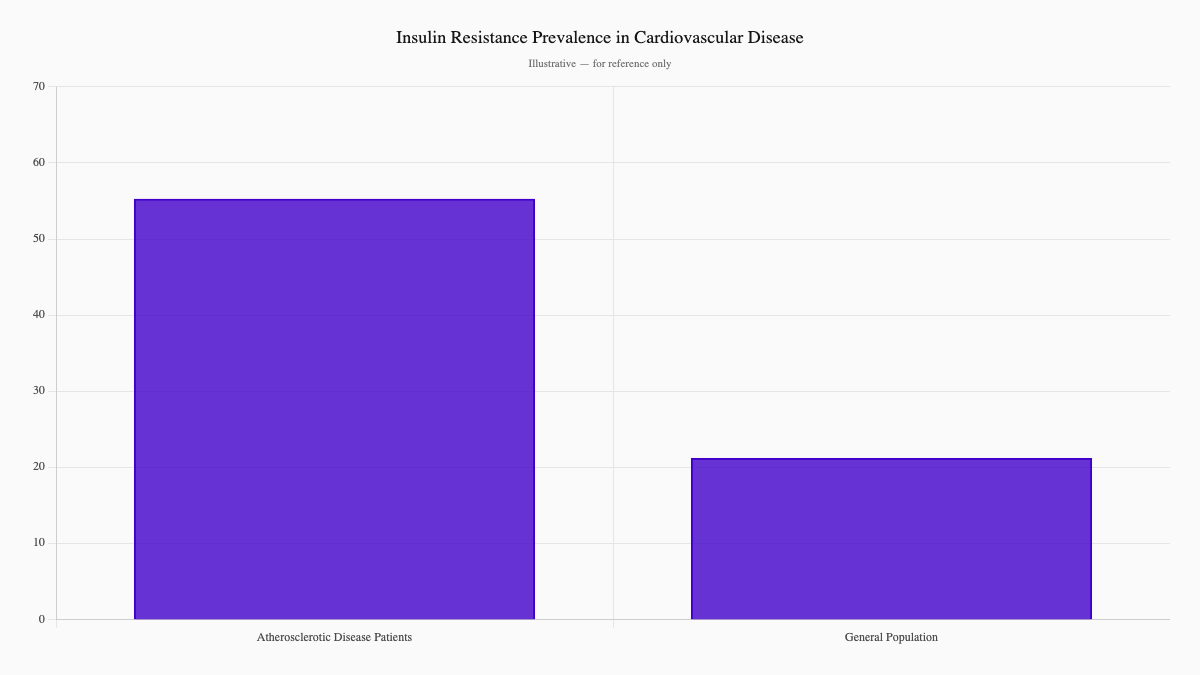
Here's a number that should scare you: 70% of patients with atherosclerotic disease have insulin resistance.
It's the number one undiagnosed driver of cardiovascular disease. And here's the kicker — most people walking around with it feel totally fine. Their doctors feel fine about it too, because the standard tests miss it.
That's the tragedy. By the time anything shows up on your labs, you've already had decades of damage happening silently.
What Actually Is Insulin Resistance?
Let me make this simple.
Insulin's job is like a key that unlocks your cells so glucose can get in. That's how your body fuels itself. But when cells become "deaf" to insulin's signal — when they stop responding — your pancreas does what any sensible organ would do: it pumps out MORE insulin to compensate.
This is called hyperinsulinemia. And that excess insulin? It's not harmless.
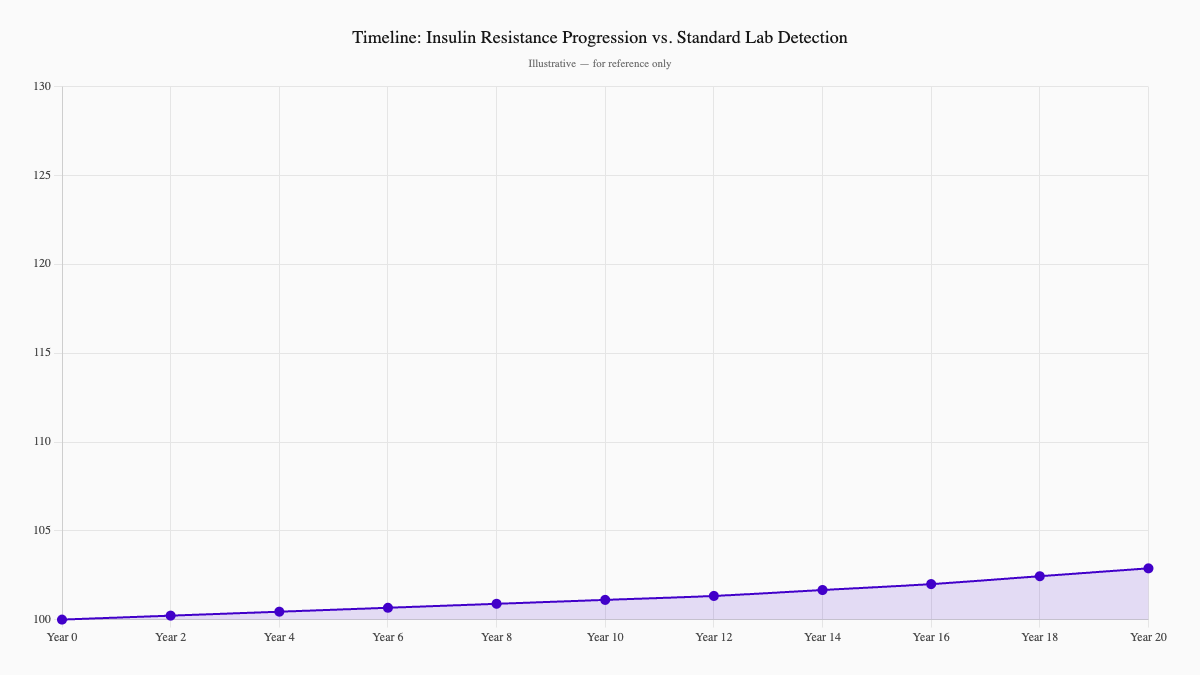
That excess insulin acts like fertilizer for plaque growth. It tells your body to store more fat, especially around your midsection. It promotes inflammation. It messes with your lipids. And it does all this 20 to 30 years before your blood sugar ever goes abnormal.
That's the part nobody talks about. By the time your doctor says "your glucose is high," you've already been in trouble for decades.
Why Your Standard Blood Tests Are Failing You
This is where standard medicine drops the ball, and it's exactly why we do things differently at Renew Health.
Here's the problem:
- Fasting glucose is often the LAST marker to become abnormal. We're talking 20-30 years into the process.
- HbA1c reflects a 2-3 month average, but it misses early dysfunction. It tells you where you've been, not where you're heading.
Dr. David Wright, one of the clinicians I respect most in this space, puts it plainly: "Fasting glucose and HbA1c alone are not sufficient. Many patients with normal fasting values will fail the OGTT."
The hidden danger: normal labs ≠ healthy arteries.
Your numbers can look great on paper while your arteries are quietly collecting plaque. This is why we test differently.
The OGTT: The Test That Catches It Early
The 2-hour Oral Glucose Tolerance Test (OGTT) is the gold standard — and it's what we use at Renew to catch dysfunction 5-10 years BEFORE fasting glucose goes abnormal.
Here's why it matters: the OGTT tests how your body handles a sugar challenge, not just the fasting state. It's like stress-testing your metabolism.
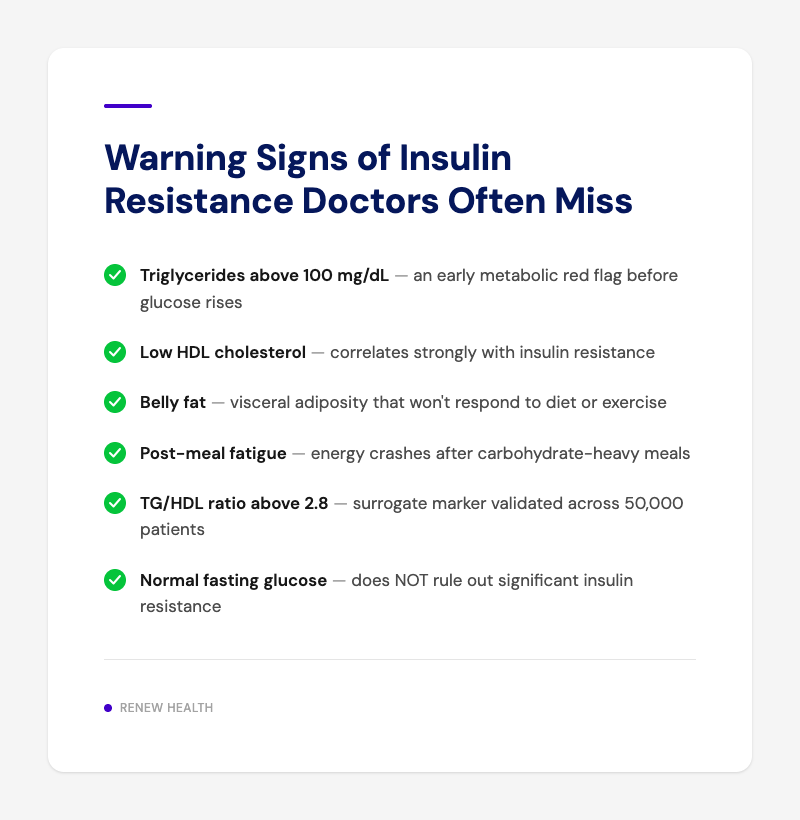
Dr. Wright has a clinical pearl that I think about often: "In my experience, if triglycerides are above 100, almost universally they fail the 2-hour OGTT."
Think about that. A simple lipid panel can hint at what's coming. The TG/HDL ratio above 2.8 is a strong surrogate marker for insulin resistance. This is why we order advanced metabolic testing — because the clues are there, if you know how to look.
How Insulin Resistance Wrecks Your Arteries
Now for the mechanism. If you're going to understand why this matters, you need to connect the dots.
Insulin resistance doesn't just mean high blood sugar. It drives a cascade of damage:
- Dyslipidemia — small dense LDL particles, low HDL, high triglycerides
- Visceral fat accumulation — that belly fat that won't budge
- Hypercoagulable state — your platelets become sticky, more likely to clot
- Oxidative stress — damages the endothelium (your artery's inner lining)
This is exactly the pathway the BaleDoneen methodology identifies: root cause → oxidative stress → cholesterol trapping → inflammation → plaque.
Insulin resistance is often the ROOT CAUSE that kicks off this entire cascade. Treat the root cause, and you can actually slow or reverse the damage.
The Warning Signs (What Doctors Miss)
Your standard labs might look "normal." But there are clues if you know where to look:
- Triglycerides elevated (especially above 100)
- Low HDL
- Belly fat that won't budge despite diet and exercise
- Fatigue after meals
- Brain fog or afternoon energy crashes
- High blood pressure developing
- Fatty liver on ultrasound
These aren't random symptoms. They're the visible fingerprints of insulin resistance — and most doctors miss them because they're only looking at the fasting glucose number.
The Renew Health Approach: Root Cause Medicine
Here's how we're different:
- We test EARLY — OGTT, not just waiting for abnormal fasting glucose
- We treat ROOT CAUSES — not just prescribe statins and say "you're fine"
- We use advanced biomarkers — ApoB, particle count, not just LDL
- We connect the dots — insulin resistance → dyslipidemia → endothelial damage → plaque
- We personalize — genetic testing (ApoE), DEXA for visceral fat, comprehensive metabolic panel
We don't wait for you to become diabetic. We catch you when you have metabolic dysfunction — and we actually do something about it.
Treatment: What Actually Works
The good news: insulin resistance is treatable. Here's what the evidence shows works:
- GLP-1 agonists (Ozempic, Mounjaro): Transformative. 15-20% weight loss, reduces ApoB, lowers inflammation, and the SELECT trial showed 20% reduction in cardiovascular events. These are game-changers.
- Metformin: Helpful for insulin sensitivity
- Low-glycemic diet: The primary intervention — cut the sugar, stabilize the insulin
- Exercise: Especially resistance training and post-meal walking
- Sleep: 7-8 hours, and address sleep apnea if you have it
- Intermittent fasting: Time-restricted eating improves insulin sensitivity
The key? Start early. The longer you wait, the harder it is to reverse.
If you've been told your heart health is fine based on cholesterol alone — or if you have any of the warning signs above — you deserve a more complete picture. Learn about our comprehensive testing and see why detecting insulin resistance early might be the most important thing you do for your heart.
Part of our Metabolic Health guide
Ready to see your actual risk?
Advanced metabolic testing, arterial imaging, and a personalized prevention plan, built around your numbers.
View Memberships