Smoke Detectors: Why Hs-CRP Matters More Than Cholesterol
Andrew founded Renew Health to change how cardiovascular disease is detected and treated.
Here's a question that might surprise you: What kills more people, fire or smoke?
In a burning building, it's usually the smoke. The flames themselves are dangerous, but it's the invisible threat — the smoke inhalation — that claims most victims.
Your arteries work the same way.
Cholesterol is like the fire. It's visible, it's dramatic, everyone talks about it. But inflammation is the smoke — invisible, deadly, and present long before you see the flames.
This is why high-sensitivity C-reactive protein (hs-CRP) might be the most important heart health marker you've never heard of.
What Is Hs-CRP?
Hs-CRP is a protein in your blood that rises when there's inflammation anywhere in your body.
The "high-sensitivity" part matters. Older CRP tests could only detect major inflammation (like an active infection). The hs-CRP test picks up the subtle, chronic, low-grade inflammation that doesn't make you feel sick — but is quietly damaging your arteries.
Think of it as a smoke detector for your cardiovascular system.
Why It Matters More Than Cholesterol
Here's the uncomfortable truth: half of all heart attacks happen in people with "normal" cholesterol.
Let that sink in.
Cholesterol is important. But inflammation is what actually causes the damage. Here's the process:
-
Inflammation damages your endothelium — the inner lining of your arteries. When this barrier breaks down, LDL cholesterol can slip through.
-
LDL particles oxidize — once inside the artery wall, inflammation causes LDL to oxidize, becoming the "soft plaque" that's most likely to rupture.
-
Plaque becomes unstable — inflamed plaque is unstable. It can rupture suddenly, causing a heart attack or stroke.
You can have perfect cholesterol numbers and still be at high risk if your inflammation markers are elevated. Conversely, some people with moderately elevated cholesterol but low inflammation have relatively low cardiovascular risk.
This is why at Renew, we test both. But we don't ignore the smoke detector.
What Is a "Normal" Hs-CRP Level?
Here's the general breakdown:
| Hs-CRP Level | Cardiovascular Risk |
|---|---|
| < 1.0 mg/L | Low risk |
| 1.0 - 3.0 mg/L | Average risk |
| > 3.0 mg/L | High risk |
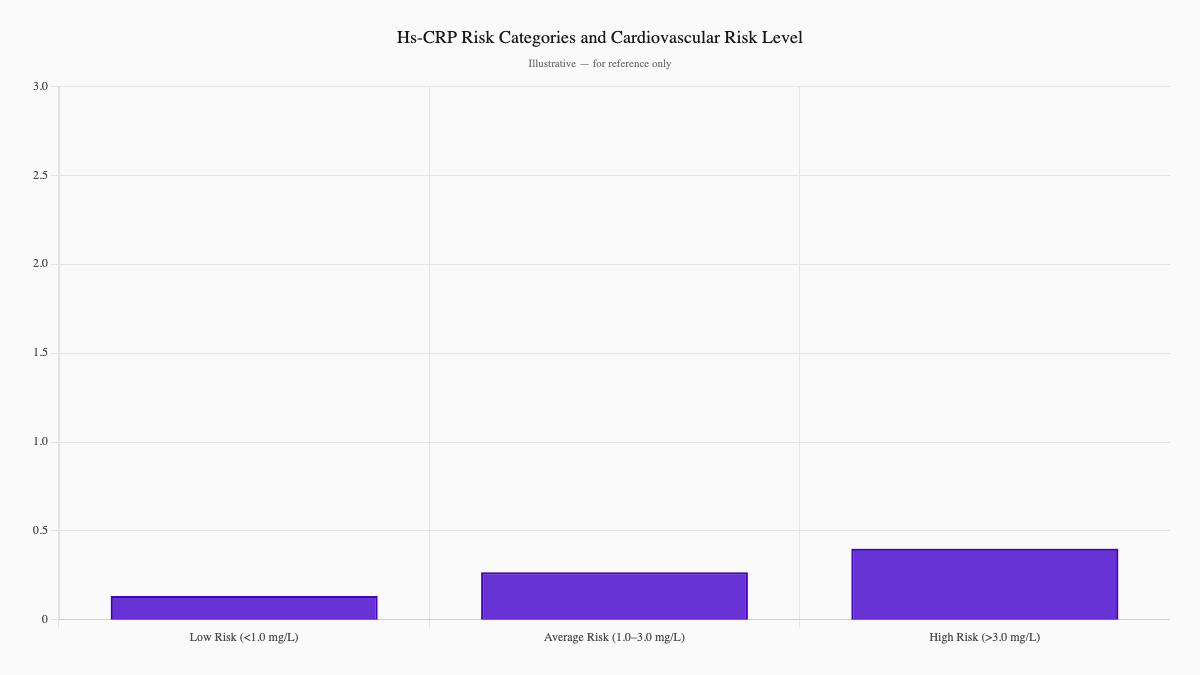
The American Heart Association considers hs-CRP an independent risk factor — meaning it predicts heart disease even after accounting for cholesterol, blood pressure, and other traditional factors.
What Causes Elevated Hs-CRP?
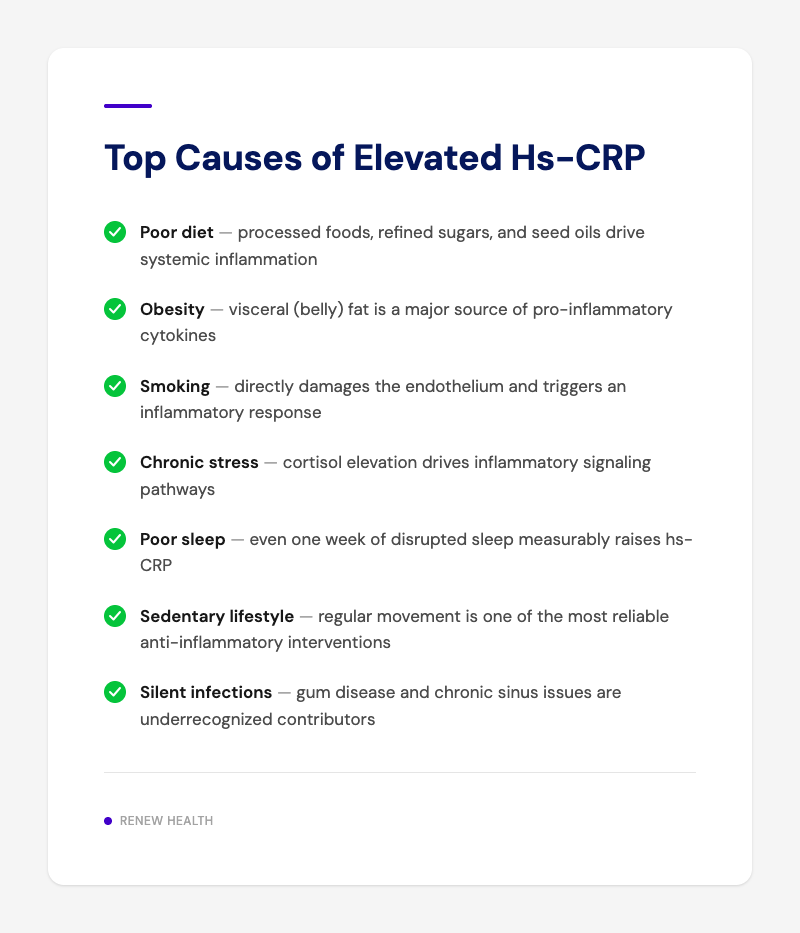
Many things can spike your inflammation markers:
- Poor diet — processed foods, refined sugars, seed oils
- Obesity — especially visceral fat (belly fat)
- Smoking — directly damages endothelium
- Chronic stress — cortisol drives inflammation
- Poor sleep — even one week of bad sleep raises hs-CRP
- Sedentary lifestyle — movement is anti-inflammatory
- Silent infections — gum disease, chronic sinus issues
- Autoimmune conditions — rheumatoid arthritis, lupus
The good news: hs-CRP responds quickly to lifestyle changes. Unlike cholesterol, which can take months to move, inflammation markers often improve within weeks of diet and exercise changes.
How We Test for Inflammation
At Renew, we don't just check hs-CRP. We look at multiple inflammation markers to get a complete picture:
- Hs-CRP — the smoke detector
- F2-Isoprostanes — measures oxidative stress in real-time
- ADMA — marker of endothelial dysfunction
- Homocysteine — amino acid that promotes inflammation
This layered approach helps us find the root cause — not just measure the damage.
Lowering Your Hs-CRP
The most effective interventions:
- Mediterranean-style diet — rich in omega-3s, vegetables, olive oil
- Regular exercise — even walking 30 minutes daily helps
- Sleep optimization — 7-8 hours consistently
- Stress management — meditation, breathwork
- Weight loss — even 5-10% reduction significantly lowers CRP
- Quit smoking — within weeks of quitting, inflammation improves
The Bigger Picture
Cholesterol is a player in heart disease. But it's not the whole game.
Inflammation is what ignites the fire. Hs-CRP is the smoke detector that warns you something is wrong — long before a heart attack.
If you've been told your heart health is fine based on cholesterol alone, you deserve a more complete picture. Learn about our comprehensive testing or view our pricing.
Don't wait for the smoke to become a fire.
Part of our Inflammation guide
Ready to see your actual risk?
Advanced metabolic testing, arterial imaging, and a personalized prevention plan, built around your numbers.
View Memberships