How Peptide Therapy Supports Heart Health: What the Research Actually Shows
Andrew founded Renew Health to change how cardiovascular disease is detected and treated.
Heart disease remains the world's leading cause of death, claiming roughly 18 million lives annually. If you've been told your cholesterol is "fine" and your arteries look "stable" — but you still feel tired, winded climbing stairs, or just not right — this article is for you.
Here's what might surprise you: even when traditional markers look acceptable, the underlying health of your blood vessels can be quietly deteriorating. Peptide therapy is emerging as a way to address some of those root causes that standard care often misses.
Why Doesn't "Normal" Always Mean Healthy?
You've probably heard the standard framing: keep your LDL low, your blood pressure in check, and you're good. But here's the uncomfortable truth — millions of people have what's called endothelial dysfunction, where the inner lining of your blood vessels isn't working optimally, even before a traditional risk factor flags any alarms.
The endothelium — that thin layer of cells lining your arteries — releases nitric oxide, which keeps your vessels relaxed and prevents inflammation. When it's damaged (by high blood sugar, smoking, chronic inflammation, or just time), you're on a path toward atherosclerosis, even if your cholesterol numbers look unremarkable.
This is where peptide therapy gets interesting.
How Does Peptide Therapy Work? The Science
Peptides are short chains of amino acids — the building blocks of proteins. Think of them as precision keys that unlock specific cellular receptors, rather than the blunt-instrument approach of many traditional medications.
Unlike small-molecule drugs, peptides can be designed to target very specific cells or receptors. That selectivity is their superpower: fewer side effects, fewer drug interactions, more focused therapeutic effects. Let's look at what the research actually shows.
1. GLP-1 Agonists: Far More Than a Weight Loss Drug
You've probably heard of Ozempic or Wegovy. But their cardiovascular impact goes well beyond the number on the scale.
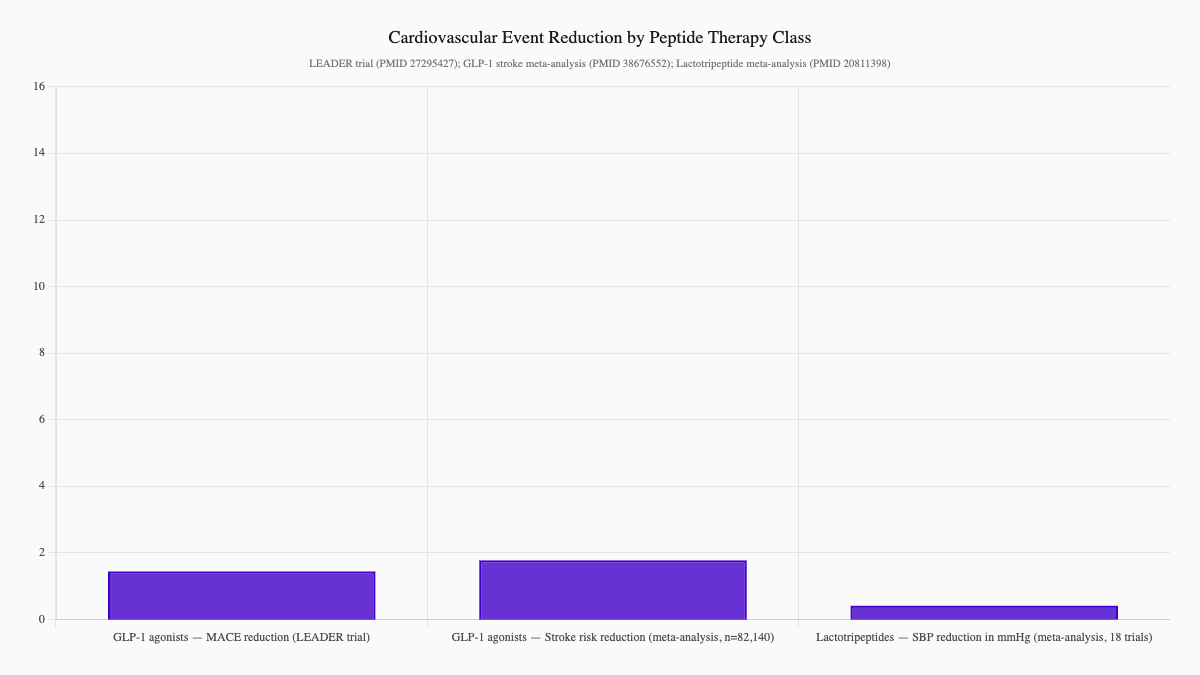
In the landmark LEADER trial — a double-blind randomized study of over 9,000 patients with type 2 diabetes — liraglutide (a GLP-1 agonist) reduced major adverse cardiovascular events by 13% compared to placebo, including cardiovascular death, non-fatal heart attack, and non-fatal stroke. (Marso et al., N Engl J Med, 2016. PMID: 27295427)
Even more compelling: a 2024 systematic review and meta-analysis of 11 cardiovascular outcome trials — covering 82,140 participants — found that GLP-1 receptor agonists reduced overall stroke risk by 16% and non-fatal stroke by 13% compared to placebo, with consistent results regardless of whether the drug was taken daily or weekly. (Adamou et al., Int J Stroke, 2024. PMID: 38676552)
The mechanism? GLP-1 appears to protect the endothelium directly, reduce systemic inflammation, and help shift immune macrophages away from the inflammatory phenotype that drives plaque progression.
What this means for you: If you're on a GLP-1 medication or considering one, you may be getting cardiovascular protection alongside the metabolic benefits — something we discuss with every patient on these therapies.
2. Natriuretic Peptides: Your Body's Built-In Blood Pressure System
Your body has its own blood pressure regulation system built around natriuretic peptides — ANP, BNP, and CNP. These signal blood vessels to relax, help excrete excess sodium, and counteract the hormones that push blood pressure up. Emerging research on synthetic analogs aims to amplify these effects therapeutically.
A 2023 review in Cardiovascular Research outlines the full therapeutic potential of the natriuretic peptide system: beyond blood pressure, these peptides appear to play a meaningful role in cardiac protection, anti-fibrotic signaling, and metabolic regulation. (Sangaralingham et al., Cardiovasc Res, 2023. PMID: 36004816)
For patients with hypertension, borderline heart function, or a history of volume overload, this pathway represents a compelling frontier in peptide-based therapy.
3. Thymosin Beta-4: Rebuilding After Damage
For patients with ischemic heart disease — where blood supply to the heart is limited — encouraging new blood vessel formation (angiogenesis) can be meaningful. One of the most studied peptides for this is Thymosin beta-4 (Tβ4).
In a 2014 study, mice treated with Tβ4 after heart attacks showed significantly better outcomes: reduced cardiac rupture deaths, decreased inflammatory cell infiltration, greater capillary density, less scar tissue (fibrosis), and improved cardiac function at five weeks. (Peng et al., Am J Physiol Heart Circ Physiol, 2014. PMID: 25015963)
While this is animal data and we're cautious about direct extrapolation to humans, Thymosin beta-4 has a well-established mechanism in tissue repair and is currently being explored in cardiac rehabilitation contexts.
4. Food-Derived Peptides: A Natural Starting Point
Not all therapeutic peptides are synthetic. Dairy-derived peptides like IPP (Isoleucine-Proline-Proline) and VPP (Valine-Proline-Proline) work by inhibiting ACE — the same target as prescription drugs like lisinopril — and may contribute modest blood pressure benefits as part of a comprehensive protocol.
A meta-analysis of 18 clinical trials found that lactotripeptide supplementation reduced systolic blood pressure by approximately 3.73 mmHg and diastolic by 1.97 mmHg overall, with more pronounced effects in Asian populations. (Cicero et al., J Hum Hypertens, 2011. PMID: 20811398)
These aren't dramatic numbers in isolation — but as one layer of a comprehensive cardiovascular protocol, every point of blood pressure reduction adds up.
Patient Story: Michael's Journey
Michael, 58, had been on cholesterol medication for years but still felt "off." His cardiologist told him his arteries were "stable" — yet he couldn't walk up a flight of stairs without chest tightness.
"I thought feeling tired was just getting older," Michael says. "I figured it was normal to slow down."
After comprehensive testing revealed significant endothelial dysfunction — elevated ADMA levels and low nitric oxide bioavailability — Michael started on a peptide therapy protocol targeting vascular health at Renew.
Within four months, his lipid panels improved and his exercise tolerance increased noticeably. "Turns out my blood vessels weren't working right. Now they are."
His story illustrates a gap that shows up again and again: there's a difference between "stable" and "optimal." Standard cardiology focuses on crisis prevention — keeping you from having a heart attack. Functional cardiovascular care asks a different question: how do we make your blood vessels actually work better?
What Warning Signs Suggest Your Blood Vessels Might Need Support?
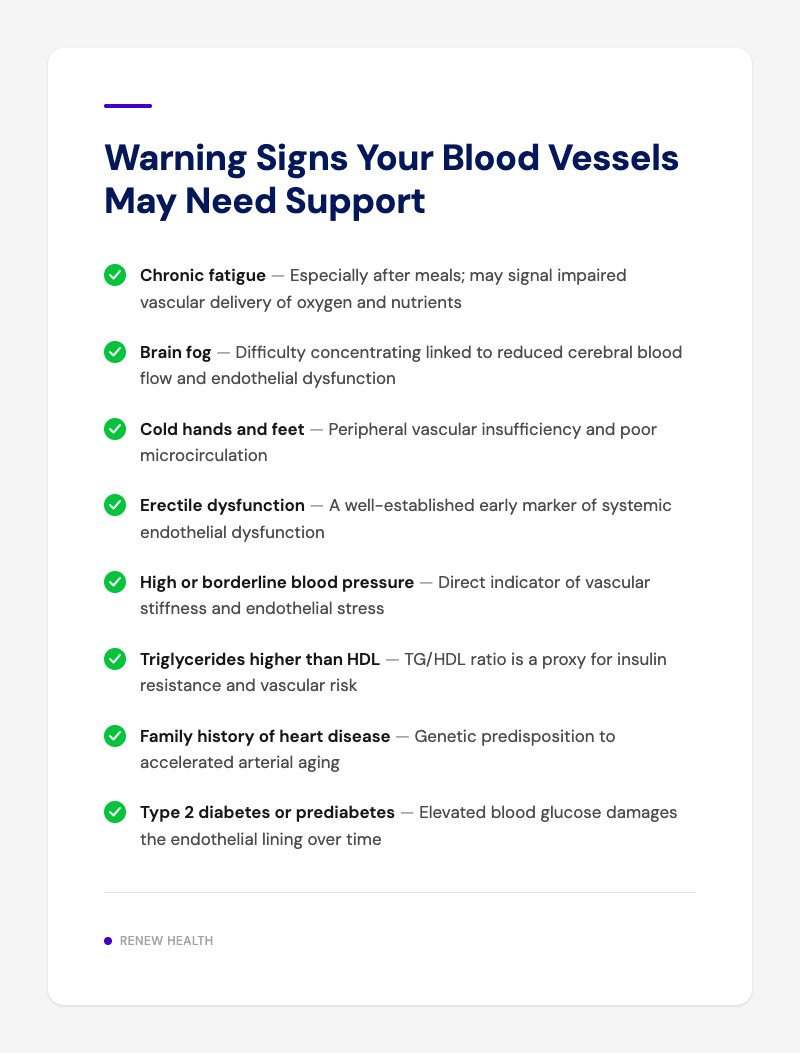
Even if your last checkup looked fine, these patterns can signal compromised endothelial function:
- Chronic fatigue, especially after meals
- Brain fog or difficulty concentrating
- Cold hands and feet
- Erectile dysfunction
- High blood pressure (or borderline readings)
- Triglycerides higher than HDL
- Family history of heart disease
- History of smoking
- Type 2 diabetes or prediabetes
If any of these apply to you, a deeper look is worth it.
How Does the Renew Approach Test Deeper?
At Renew, we don't just look at cholesterol numbers. We assess the actual health and function of your cardiovascular system:
- CIMT (Carotid Intima-Media Thickness) — Ultrasound that measures the thickness of your carotid artery walls, detecting atherosclerosis years before it shows on standard tests. Takes about 15 minutes and gives us data you can act on.
- Endothelial function testing — Assessing nitric oxide bioavailability and ADMA levels
- Advanced lipid panels — Beyond LDL/HDL to particle size, Lp(a), and ApoB
- Metabolic markers — Insulin sensitivity, fasting glucose, HbA1c
This gives us a clear picture of your actual cardiovascular risk — not just numbers, but how your system is functioning.
How Do We Think About Treatment Options?
Peptide therapy is one tool in a broader toolkit. Here's how we approach cardiovascular optimization at Renew:
Foundation: Lifestyle
- Anti-inflammatory nutrition
- Regular movement (especially zone 2 cardio)
- Sleep optimization
- Stress management
Targeted Supplementation
- Omega-3 fatty acids (inflammation)
- L-arginine or L-citrulline (nitric oxide support)
- CoQ10 (mitochondrial support)
- Vitamin D
Pharmacologic (When Appropriate)
- GLP-1 agonists for metabolic and cardiovascular protection
- Peptide therapy protocols for specific goals
- Statins or other medications as clinically indicated
Peptide Protocols
- BPC-157 for tissue repair and gut-vascular axis
- Thymosin beta-4 for angiogenesis and recovery
- Custom protocols based on your individual testing
What Should You Know Honestly About Peptide Therapy?
Peptide therapy isn't perfect, and we want you to go in with clear expectations:
Delivery: Most peptides can't survive oral digestion, so they're administered by injection. Most patients adapt quickly — the needles are small and the process becomes routine.
Cost: Peptides are more expensive to produce than conventional drugs. We'll walk you through pricing during your consultation. See our pricing page for a starting point.
Consistency: Peptides clear the body quickly, so dosing schedules matter. Missing doses interrupts the therapeutic effect.
These aren't dealbreakers — they're trade-offs. For the right patient, they're well worth it.
What Should You Do Next?
If you've been told everything looks fine but you don't feel fine — here's how to start:
-
Schedule a free consultation — We'll review your history, discuss your concerns, and see if our approach fits your situation.
-
Consider CIMT testing — Our carotid ultrasound can reveal arterial health that standard tests miss. 15 minutes, actionable data.
-
Build a protocol together — Whether that includes peptide therapy, GLP-1 medications, supplements, or lifestyle optimization, we'll create a plan based on your specific biology.
What's the Bottom Line?
Peptide therapy isn't a magic bullet. But for the right patient, it's a powerful tool that addresses cardiovascular health at a level traditional medicine often overlooks. The research is growing, the mechanisms are well-characterized, and the patients we've worked with are seeing real results.
If you're curious about what peptide therapy could do for your heart health — let's talk.
Ready to learn more? Schedule your free consultation to discuss your cardiovascular health and whether peptide therapy is right for you.
References
-
Marso SP, Daniels GH, Brown-Frandsen K, et al. Liraglutide and Cardiovascular Outcomes in Type 2 Diabetes (LEADER Trial). N Engl J Med. 2016;375(4):311–22. PMID: 27295427
-
Adamou A, Barkas F, Milionis H, Ntaios G. Glucagon-like peptide-1 receptor agonists and stroke: A systematic review and meta-analysis of cardiovascular outcome trials. Int J Stroke. 2024;19(8):876–887. PMID: 38676552
-
Peng H, et al. Thymosin-β4 prevents cardiac rupture and improves cardiac function in mice with myocardial infarction. Am J Physiol Heart Circ Physiol. 2014;307(5):H741–51. PMID: 25015963
-
Sangaralingham SJ, et al. Natriuretic peptide pathways in heart failure: further therapeutic possibilities. Cardiovasc Res. 2023;118(18):3416–3433. PMID: 36004816
-
Cicero AFG, Gerocarni B, Laghi L, Borghi C. Blood pressure lowering effect of lactotripeptides assumed as functional foods: a meta-analysis of current available clinical trials. J Hum Hypertens. 2011;25(7):425–36. PMID: 20811398
This article is for informational purposes only and does not constitute medical advice. Always consult with a qualified healthcare provider before starting any new treatment protocol.
Ready to see your actual risk?
Advanced metabolic testing, arterial imaging, and a personalized prevention plan, built around your numbers.
View Memberships